2025
RayFronts: Open-Set Semantic Ray Frontiers for Online Scene Understanding and Exploration
Omar Alama, Avigyan Bhattacharya, Haoyang He, Seungchan Kim, Yuheng Qiu, Wenshan Wang, Cherie Ho, Nikhil Keetha, Sebastian Scherer
IEEE/RSJ International Conference on Intelligent Robots and Systems (IROS) 2025 Oral
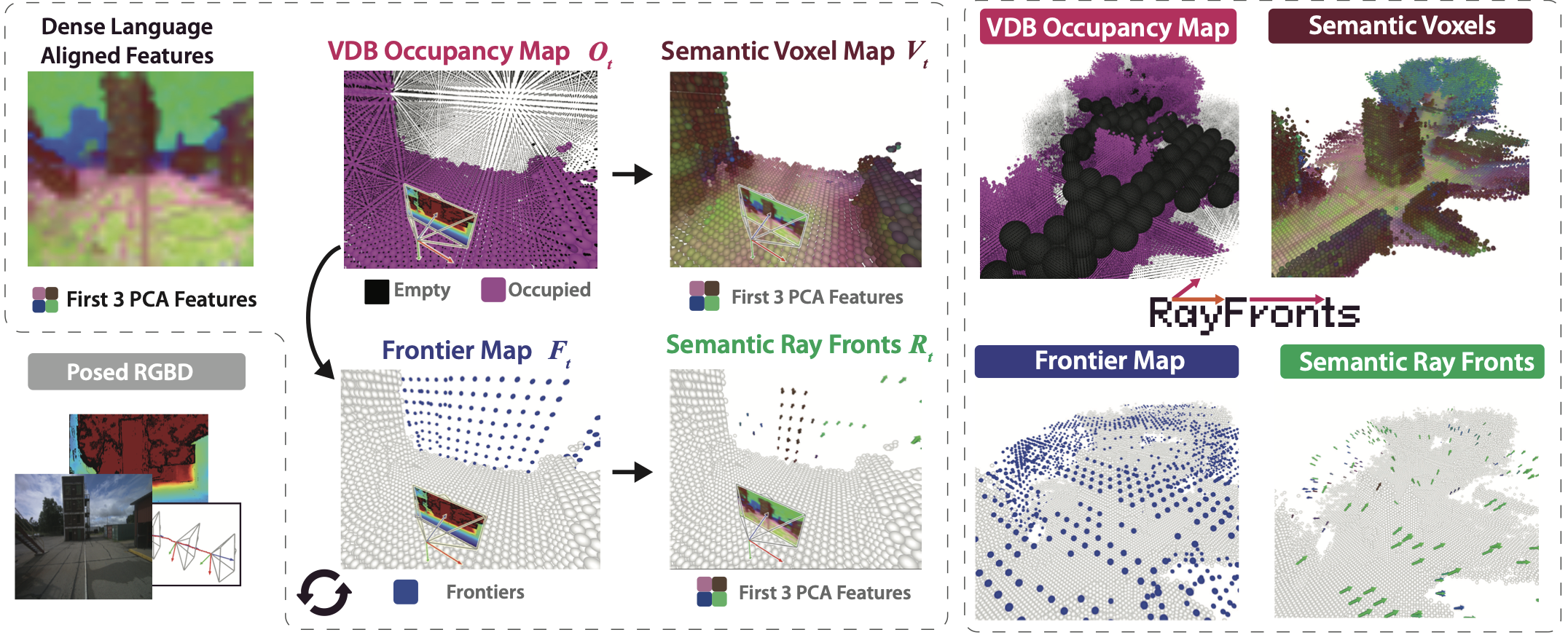
RayFronts offers a unified representation for open-set semantic mapping that bridges the gap between in-range and beyond-range perception in robotic systems. By encoding semantics into both voxels and rays, it enables efficient, fine-grained mapping and planning, even beyond sensor limits, while running in real-time. Our evaluations show significant gains in both segmentation accuracy and exploration efficiency, making RayFronts well-suited for open-world robot navigation.
RayFronts: Open-Set Semantic Ray Frontiers for Online Scene Understanding and Exploration
Omar Alama, Avigyan Bhattacharya, Haoyang He, Seungchan Kim, Yuheng Qiu, Wenshan Wang, Cherie Ho, Nikhil Keetha, Sebastian Scherer
IEEE/RSJ International Conference on Intelligent Robots and Systems (IROS) 2025 Oral
RayFronts offers a unified representation for open-set semantic mapping that bridges the gap between in-range and beyond-range perception in robotic systems. By encoding semantics into both voxels and rays, it enables efficient, fine-grained mapping and planning, even beyond sensor limits, while running in real-time. Our evaluations show significant gains in both segmentation accuracy and exploration efficiency, making RayFronts well-suited for open-world robot navigation.
DEPP: Dictionary Embedded Probabilistic Priors for Scene Text Image Super-Resolution
Avigyan Bhattacharya, Subhadip Basu, Tapabrata Chakraborti
Neural Computing and Applications 2025
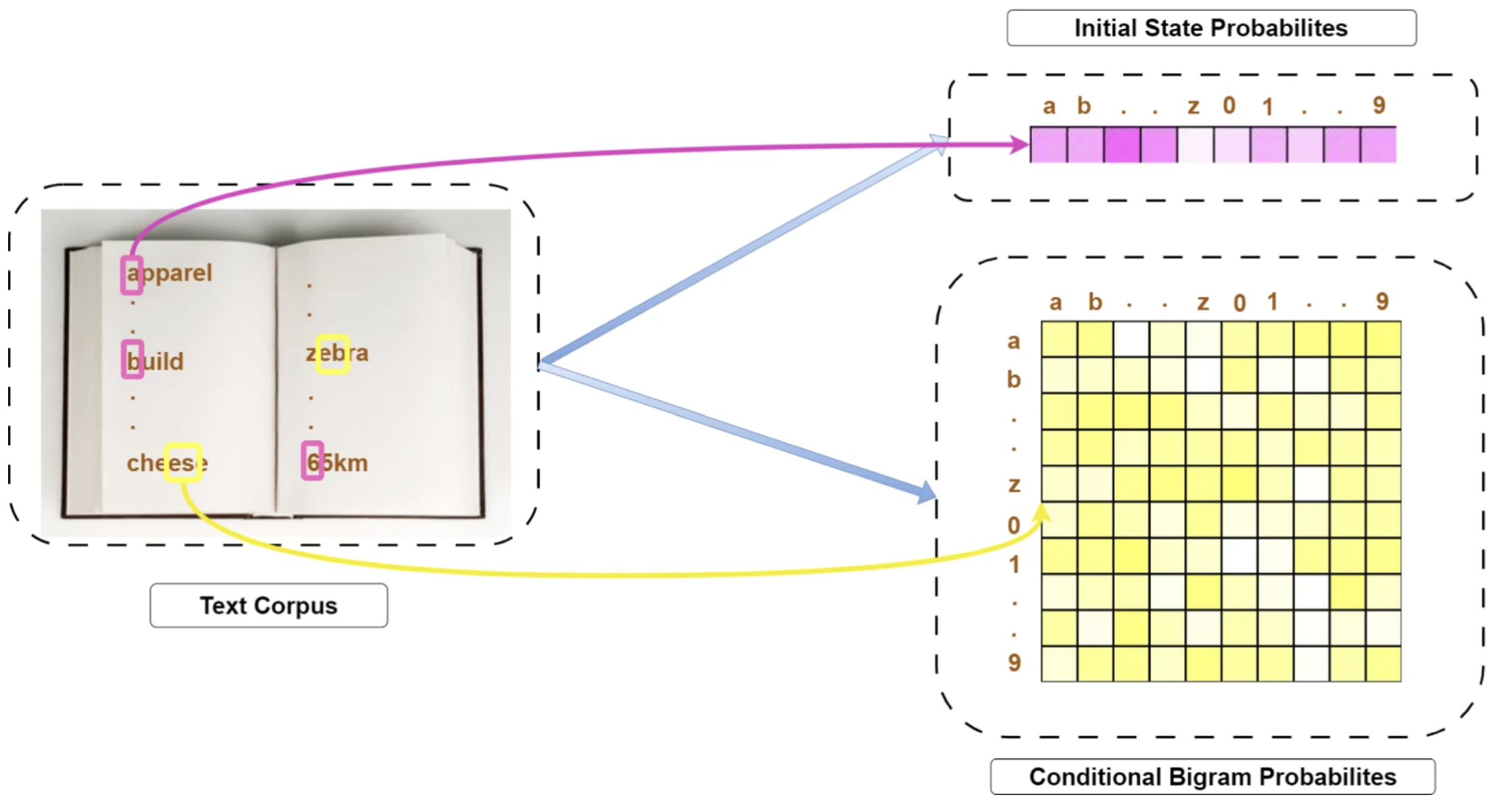
Instead of treating text image super-resolution as a generic visual enhancement task, DEPP brings in a language-aware perspective by fusing dictionary-based probabilistic priors with recognizer outputs. This fusion enables more accurate reconstruction of medium and long words, overcoming the limitations of recognizer-driven feedback on low-res text. Evaluations on the TextZoom dataset show DEPP’s strong advantage in both perceptual quality and recognition accuracy.
DEPP: Dictionary Embedded Probabilistic Priors for Scene Text Image Super-Resolution
Avigyan Bhattacharya, Subhadip Basu, Tapabrata Chakraborti
Neural Computing and Applications 2025
Instead of treating text image super-resolution as a generic visual enhancement task, DEPP brings in a language-aware perspective by fusing dictionary-based probabilistic priors with recognizer outputs. This fusion enables more accurate reconstruction of medium and long words, overcoming the limitations of recognizer-driven feedback on low-res text. Evaluations on the TextZoom dataset show DEPP’s strong advantage in both perceptual quality and recognition accuracy.
2024
Learning Class and Domain Augmentations for Single-Source Open-Domain Generalization
Prathmesh Bele, Valay Bundele*, Avigyan Bhattacharya*, Ankit Jha, Gemma Roig, Biplab Banerjee (* equal contribution)
IEEE/CVF Winter Conference on Applications of Computer Vision (WACV) 2024
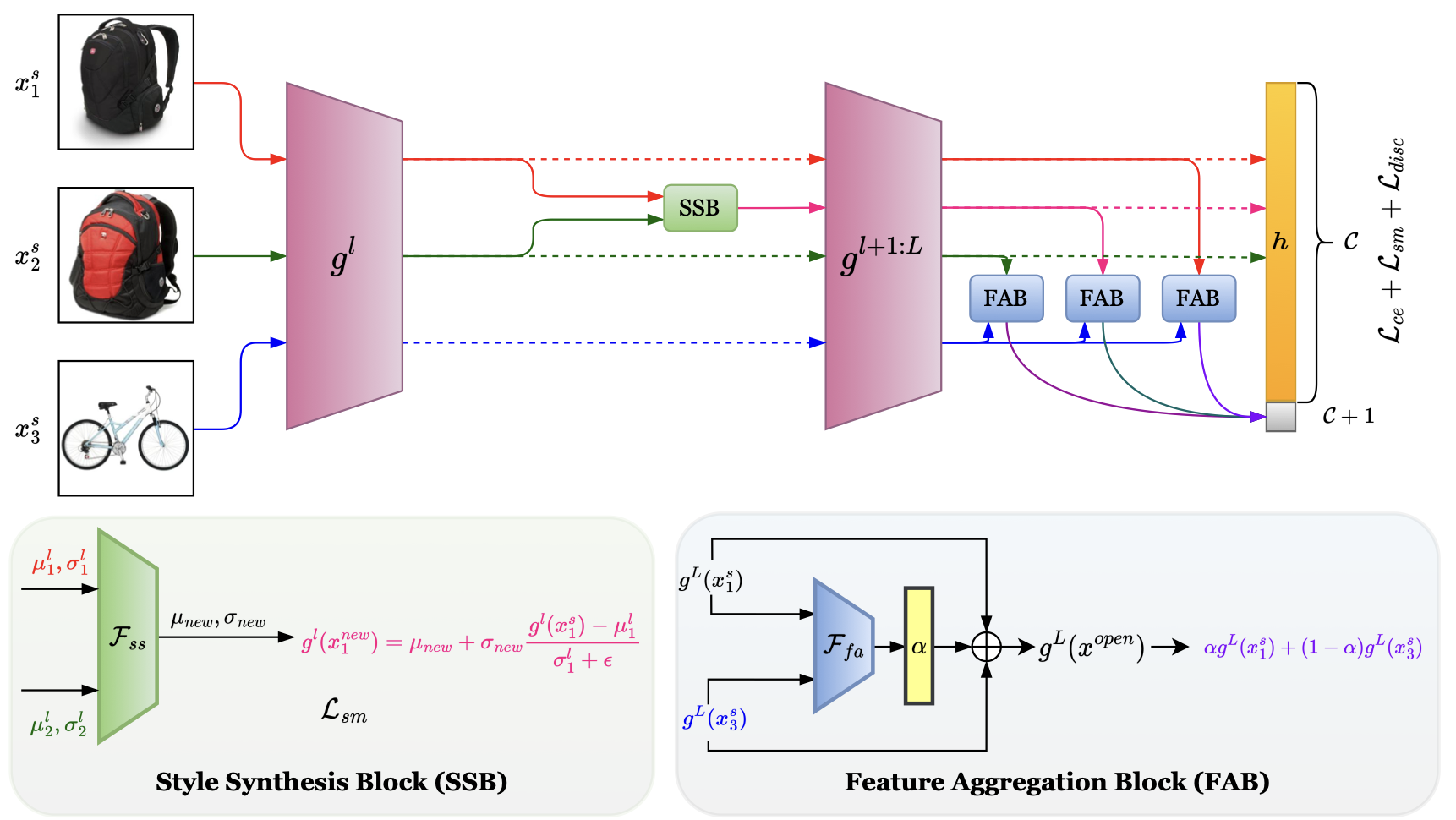
To tackle the challenge of generalizing from a single labeled source domain to unseen open-domain targets, we introduce a framework that learns to synthesize novel domains and generate pseudo-open samples in a principled manner. Unlike prior methods, SODG-NET enhances visual diversity and classifier robustness using a metric-driven approach, leading to consistent performance gains across multiple benchmarks in fine-grained open-closed scenarios.
Learning Class and Domain Augmentations for Single-Source Open-Domain Generalization
Prathmesh Bele, Valay Bundele*, Avigyan Bhattacharya*, Ankit Jha, Gemma Roig, Biplab Banerjee (* equal contribution)
IEEE/CVF Winter Conference on Applications of Computer Vision (WACV) 2024
To tackle the challenge of generalizing from a single labeled source domain to unseen open-domain targets, we introduce a framework that learns to synthesize novel domains and generate pseudo-open samples in a principled manner. Unlike prior methods, SODG-NET enhances visual diversity and classifier robustness using a metric-driven approach, leading to consistent performance gains across multiple benchmarks in fine-grained open-closed scenarios.
Enhancing the Domain Robustness of Self-Supervised Pre-training with Synthetic Images
Mohamad Hassan N C, Avigyan Bhattacharya, Victor G. Turrisi da Costa, Biplab Banerjee, Elisa Ricci
IEEE International Conference on Acoustics, Speech, and Signal Processing (ICASSP) 2024
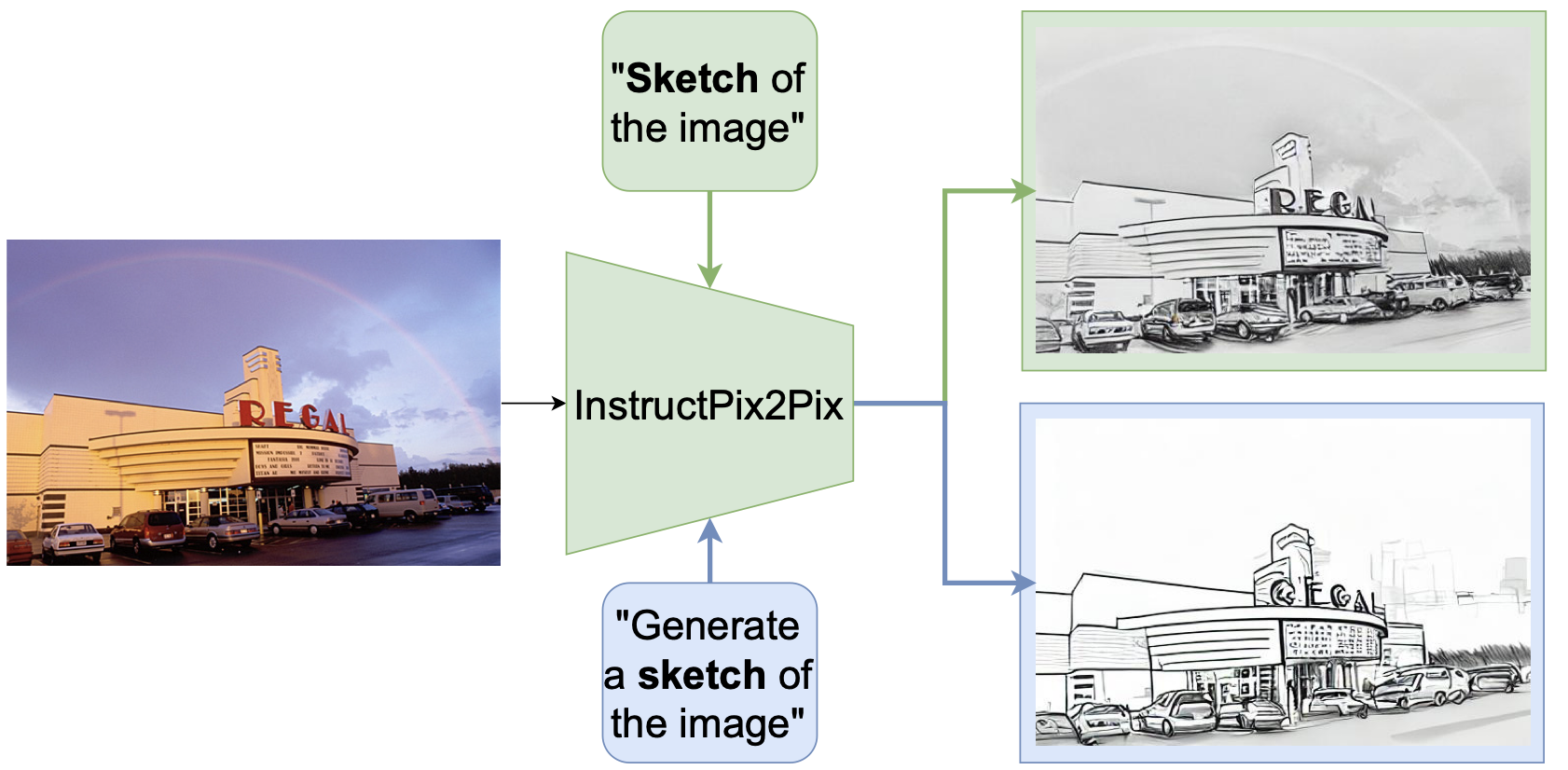
We explore how synthetic data can enhance domain adaptability in self-supervised learning by leveraging InstructPix2Pix to generate semantically consistent, multi-domain image variants. By incorporating these synthetic samples into the training process, we significantly improve generalization across diverse benchmarks like DomainNet, PACS, and Office-Home. Our results highlight the promise of diffusion-based augmentation for robust SSL pre-training.
Enhancing the Domain Robustness of Self-Supervised Pre-training with Synthetic Images
Mohamad Hassan N C, Avigyan Bhattacharya, Victor G. Turrisi da Costa, Biplab Banerjee, Elisa Ricci
IEEE International Conference on Acoustics, Speech, and Signal Processing (ICASSP) 2024
We explore how synthetic data can enhance domain adaptability in self-supervised learning by leveraging InstructPix2Pix to generate semantically consistent, multi-domain image variants. By incorporating these synthetic samples into the training process, we significantly improve generalization across diverse benchmarks like DomainNet, PACS, and Office-Home. Our results highlight the promise of diffusion-based augmentation for robust SSL pre-training.
Crowdsourcing the curation of the training set for harmful content classifiers used in social media: A pilot study on political hate speech in India
Avigyan Bhattacharya, Tapabrata Chakraborti, Subhadip Basu, Alistair Knott, Dino Pedreschi, Raja Chatila, Susan Leavy, David Eyers, Paul D. Teal, Przemyslaw Biecek
ACM Web Science Conference / GPAI Summit 2024
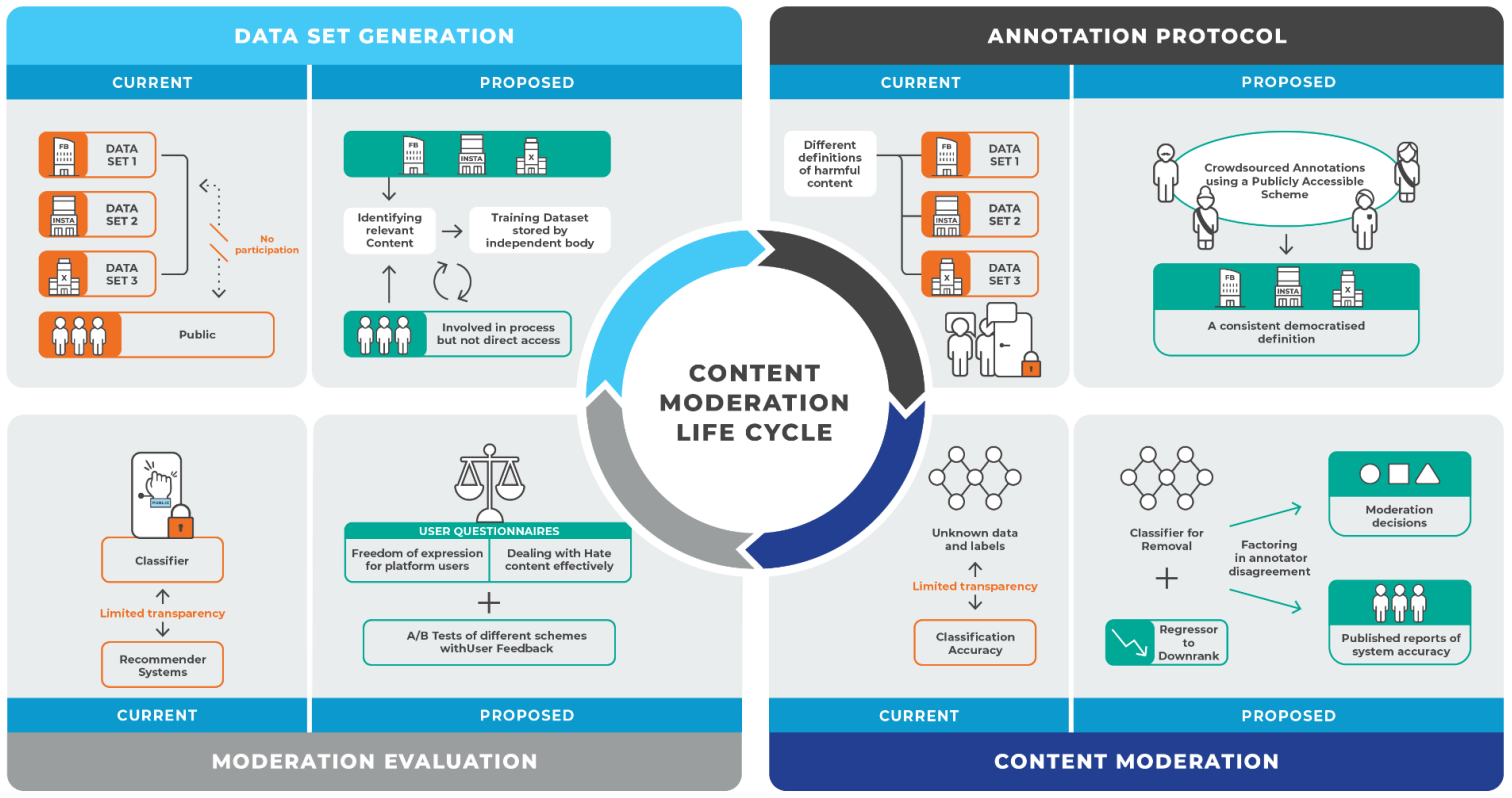
Tackling the rise of AI-driven political hate speech, we propose a transparent, crowdsourced approach to content moderation that respects cultural and linguistic context—moving beyond the opaque, one-size-fits-all strategies of major platforms. Our proof-of-concept study within the Indian electoral discourse includes a richly annotated tweet dataset and highlights emerging sociopolitical patterns through statistical analysis. This democratized framework lays the groundwork for more equitable and context-aware moderation policies.
Crowdsourcing the curation of the training set for harmful content classifiers used in social media: A pilot study on political hate speech in India
Avigyan Bhattacharya, Tapabrata Chakraborti, Subhadip Basu, Alistair Knott, Dino Pedreschi, Raja Chatila, Susan Leavy, David Eyers, Paul D. Teal, Przemyslaw Biecek
ACM Web Science Conference / GPAI Summit 2024
Tackling the rise of AI-driven political hate speech, we propose a transparent, crowdsourced approach to content moderation that respects cultural and linguistic context—moving beyond the opaque, one-size-fits-all strategies of major platforms. Our proof-of-concept study within the Indian electoral discourse includes a richly annotated tweet dataset and highlights emerging sociopolitical patterns through statistical analysis. This democratized framework lays the groundwork for more equitable and context-aware moderation policies.
2023
C-SAW: Self-Supervised Prompt Learning for Image Generalization in Remote Sensing
Avigyan Bhattacharya, Mainak Singha, Ankit Jha, Biplab Banerjee
ACM Indian Conference on Vision, Graphics and Image Processing (ICVGIP) 2023 Best Paper Award
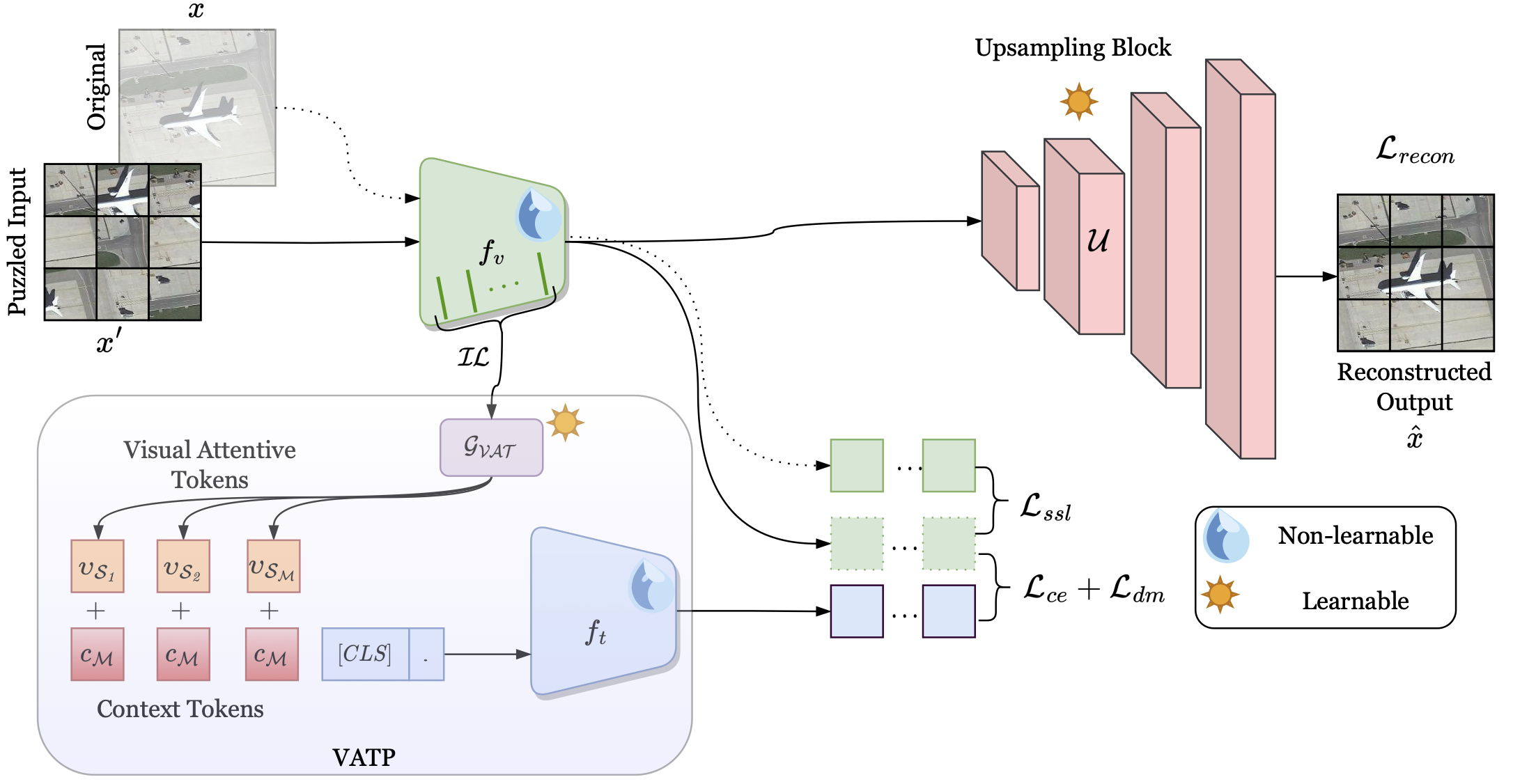
We introduce a method designed to enhance CLIP’s performance on domain and class generalization tasks in optical remote sensing. By combining a self-supervised loss with a novel prompt learning strategy that incorporates both domain and content-specific features, C-SAW significantly improves zero-shot generalization without fine-tuning the CLIP backbone. Our experiments show consistent gains across multiple remote sensing benchmarks.
C-SAW: Self-Supervised Prompt Learning for Image Generalization in Remote Sensing
Avigyan Bhattacharya, Mainak Singha, Ankit Jha, Biplab Banerjee
ACM Indian Conference on Vision, Graphics and Image Processing (ICVGIP) 2023 Best Paper Award
We introduce a method designed to enhance CLIP’s performance on domain and class generalization tasks in optical remote sensing. By combining a self-supervised loss with a novel prompt learning strategy that incorporates both domain and content-specific features, C-SAW significantly improves zero-shot generalization without fine-tuning the CLIP backbone. Our experiments show consistent gains across multiple remote sensing benchmarks.
Ontology guided Context Understanding for Robotic Task Execution
Dibyarup Dutta, Avigyan Bhattacharya, Snehasis Banerjee
IEEE International Conference on Robotics and Automation (ICRA) - Workshop 2023
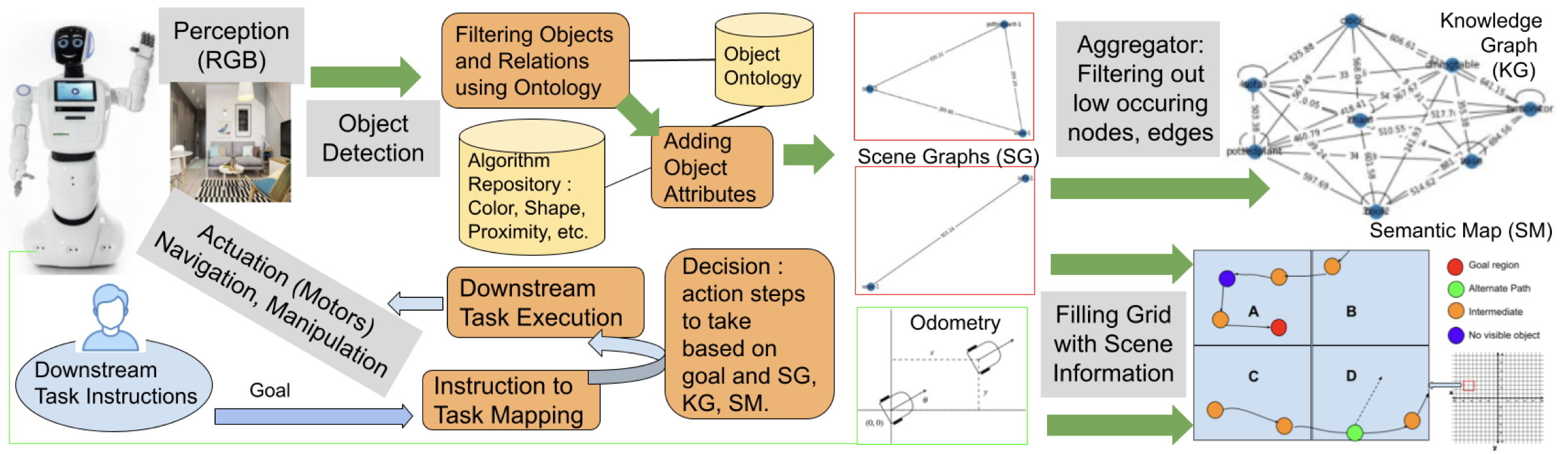
Understanding whether a robot can perform a given task in a specific environment requires more than just perception—it calls for reasoning. In this work, we combine an extended IEEE CORA ontology with semantic web technologies and perception to build scene and knowledge graphs that support task feasibility analysis. The system operates in realistic simulation environments and is designed for smooth transition to physical-world deployment.
Ontology guided Context Understanding for Robotic Task Execution
Dibyarup Dutta, Avigyan Bhattacharya, Snehasis Banerjee
IEEE International Conference on Robotics and Automation (ICRA) - Workshop 2023
Understanding whether a robot can perform a given task in a specific environment requires more than just perception—it calls for reasoning. In this work, we combine an extended IEEE CORA ontology with semantic web technologies and perception to build scene and knowledge graphs that support task feasibility analysis. The system operates in realistic simulation environments and is designed for smooth transition to physical-world deployment.
Generating Synthetic Computed Tomography (CT) Images to Improve the Performance of Machine Learning Model for Pediatric Abdominal Anomaly Detection
Samayan Bhattacharya*, Avigyan Bhattacharya*, Sk Shahnawaz (* equal contribution)
IEEE/CVF International Conference on Computer Vision (ICCV) - BioImage Computing Workshop 2023
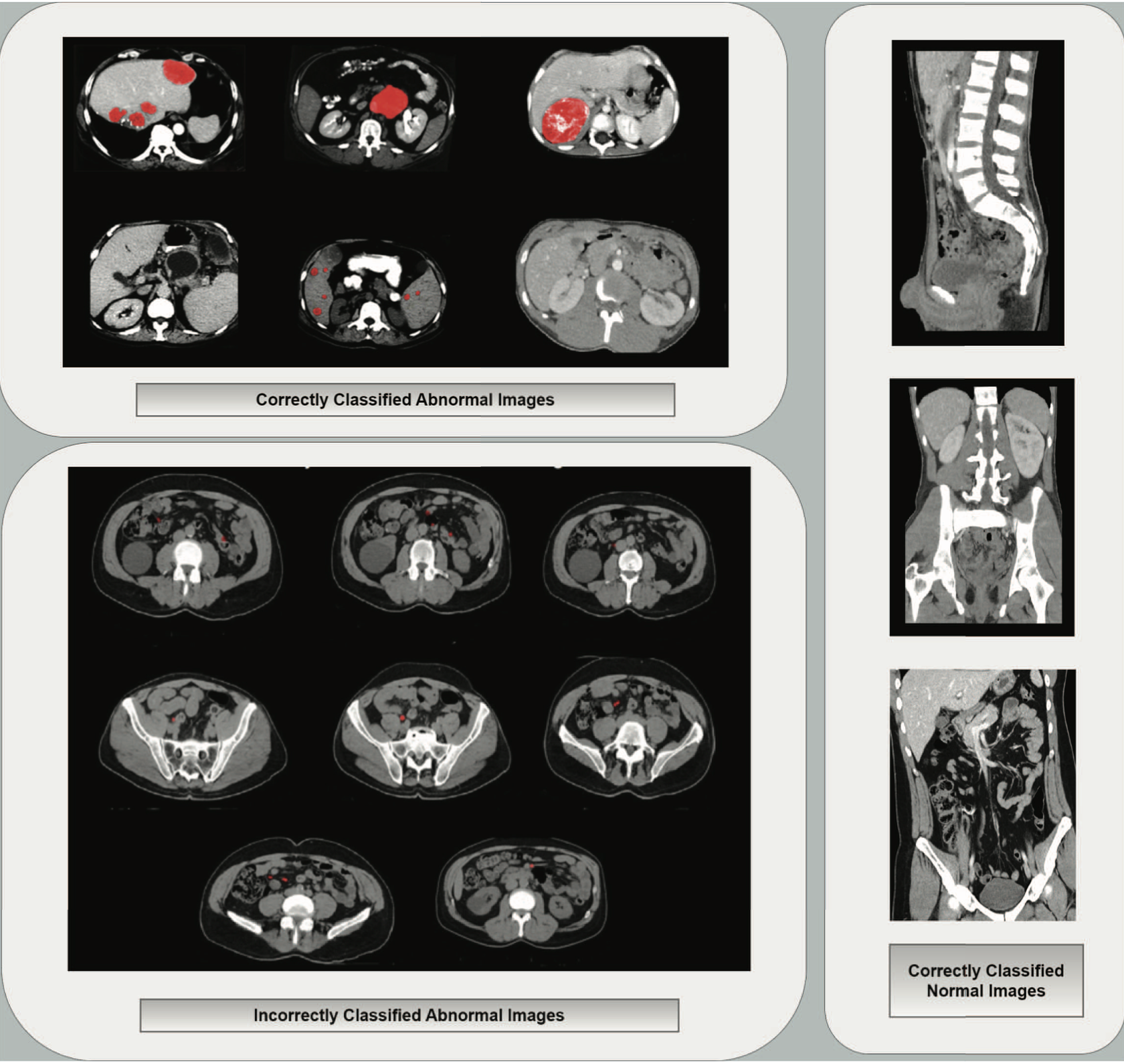
To address the risks and accessibility issues of CT scans in diagnosing pediatric abdominal pain, we explore generating synthetic CT images from orthogonal X-rays using machine learning. This approach enhances anomaly detection such as cysts and appendicitis, while reducing radiation exposure and dependence on high-end equipment. Our method yields a 9.75% performance boost over X-rays alone, showing strong potential for safer, low-resource diagnostics.
Generating Synthetic Computed Tomography (CT) Images to Improve the Performance of Machine Learning Model for Pediatric Abdominal Anomaly Detection
Samayan Bhattacharya*, Avigyan Bhattacharya*, Sk Shahnawaz (* equal contribution)
IEEE/CVF International Conference on Computer Vision (ICCV) - BioImage Computing Workshop 2023
To address the risks and accessibility issues of CT scans in diagnosing pediatric abdominal pain, we explore generating synthetic CT images from orthogonal X-rays using machine learning. This approach enhances anomaly detection such as cysts and appendicitis, while reducing radiation exposure and dependence on high-end equipment. Our method yields a 9.75% performance boost over X-rays alone, showing strong potential for safer, low-resource diagnostics.
Classification of Incomplete Data using Augmented Dataset
Avigyan Bhattacharya, Sreeja Bhose, Suvra Jyoti Choudhury
IEEE International Conference for Advancement in Technology 2023
We propose a training strategy for MLPs to improve classification performance on incomplete data. Our method involves initial training on complete data, followed by retraining with an augmented dataset that simulates missingness using predefined imputations. Across twelve datasets and four imputation strategies, our approach consistently outperforms standard MLPs.
Classification of Incomplete Data using Augmented Dataset
Avigyan Bhattacharya, Sreeja Bhose, Suvra Jyoti Choudhury
IEEE International Conference for Advancement in Technology 2023
We propose a training strategy for MLPs to improve classification performance on incomplete data. Our method involves initial training on complete data, followed by retraining with an augmented dataset that simulates missingness using predefined imputations. Across twelve datasets and four imputation strategies, our approach consistently outperforms standard MLPs.
2022
JUVDsi v1: Developing and Benchmarking a new still image database in Indian scenario for Automatic Vehicle Detection
Avirup Bhattacharyya*, Avigyan Bhattacharya*, Sourajit Maity*, Pawan Kumar Singh, Ram Sarkar (* equal contribution)
Multimedia Tools and Applications, Springer 2022
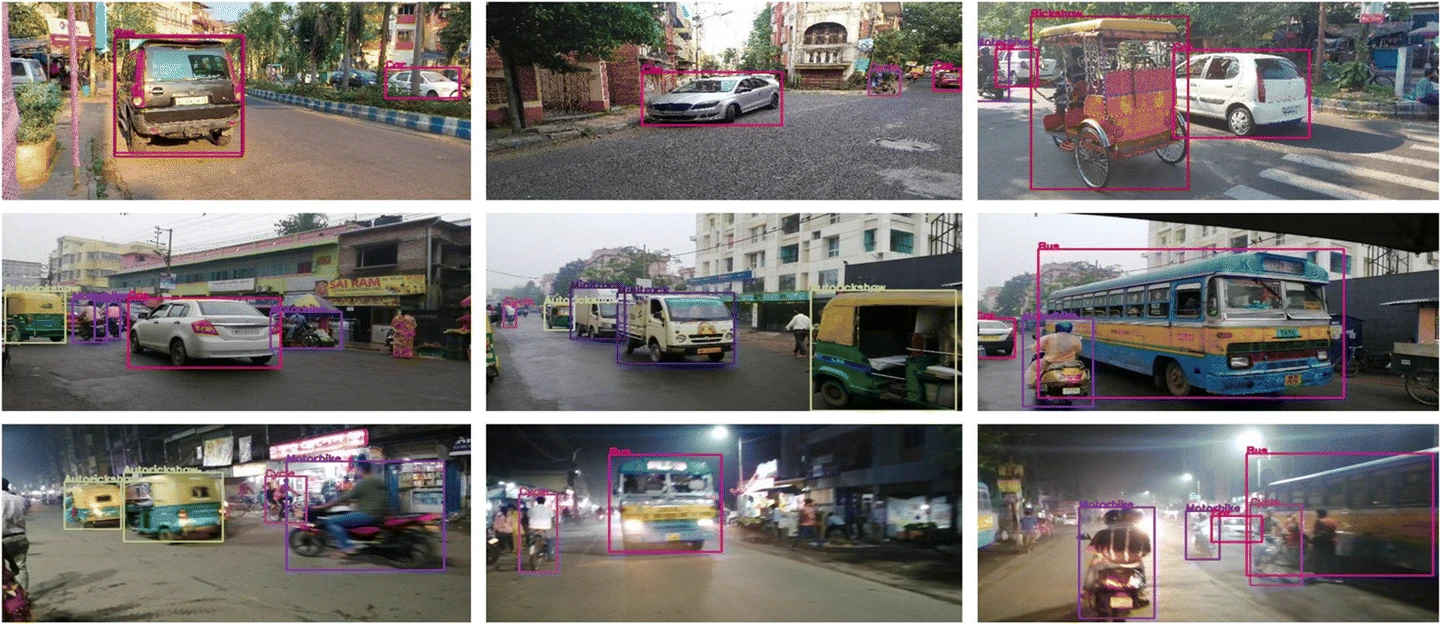
This paper presents JUVDsi v1, a new still image vehicle detection database tailored to Indian traffic conditions, addressing limitations in existing datasets. The database includes diverse vehicle classes captured via mobile phones and is evaluated using an ensemble of advanced object detection models. The ensemble approach, leveraging Weighted Boxes Fusion, improves detection accuracy over individual models.
JUVDsi v1: Developing and Benchmarking a new still image database in Indian scenario for Automatic Vehicle Detection
Avirup Bhattacharyya*, Avigyan Bhattacharya*, Sourajit Maity*, Pawan Kumar Singh, Ram Sarkar (* equal contribution)
Multimedia Tools and Applications, Springer 2022
This paper presents JUVDsi v1, a new still image vehicle detection database tailored to Indian traffic conditions, addressing limitations in existing datasets. The database includes diverse vehicle classes captured via mobile phones and is evaluated using an ensemble of advanced object detection models. The ensemble approach, leveraging Weighted Boxes Fusion, improves detection accuracy over individual models.
MRI-EEG Instance Discrimination for Brain Lesion Identification
Samayan Bhattacharya, Avigyan Bhattacharya, Sk Shahnawaz
IEEE CIBCB (Computational Intelligence in Bioinformatics and Computational Biology) 2022
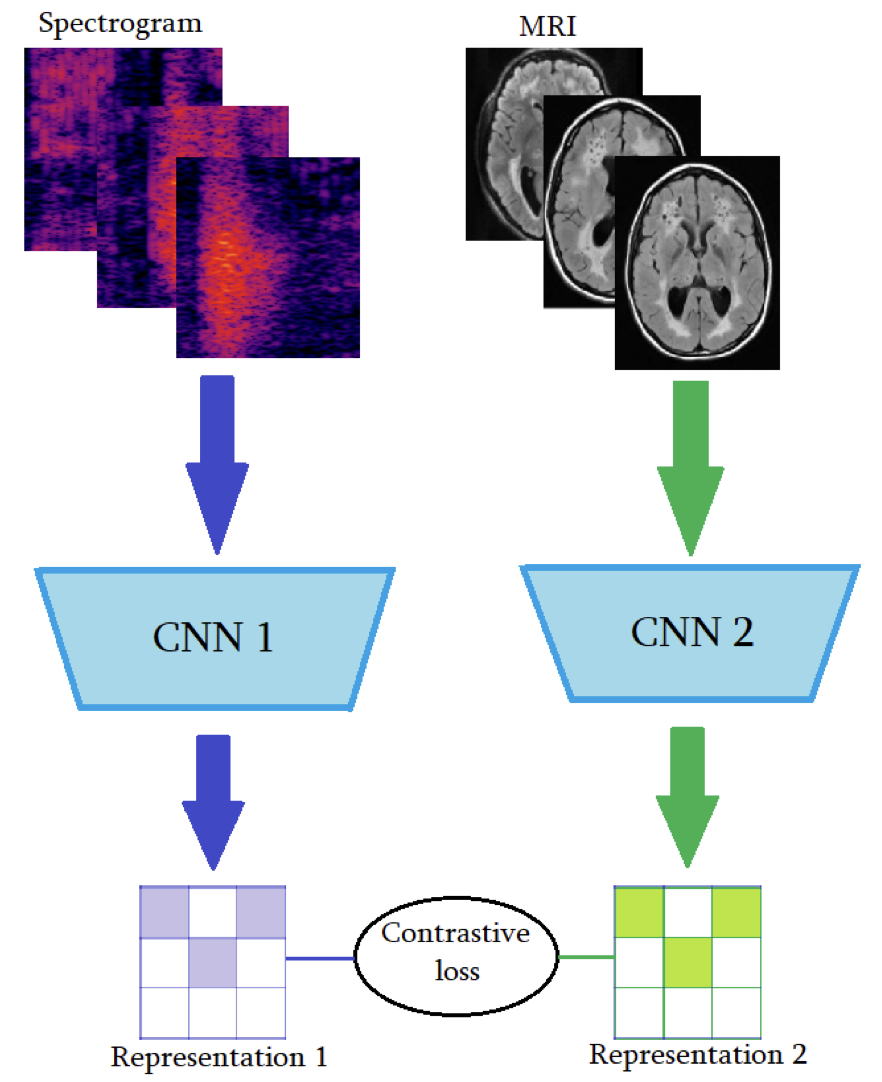
We introduce a self-supervised contrastive learning method to detect brain lesions using unannotated MRI and EEG data. The approach reduces reliance on large annotated datasets and human intervention, aiming to improve lesion-deficit mapping and neurological diagnosis.
MRI-EEG Instance Discrimination for Brain Lesion Identification
Samayan Bhattacharya, Avigyan Bhattacharya, Sk Shahnawaz
IEEE CIBCB (Computational Intelligence in Bioinformatics and Computational Biology) 2022
We introduce a self-supervised contrastive learning method to detect brain lesions using unannotated MRI and EEG data. The approach reduces reliance on large annotated datasets and human intervention, aiming to improve lesion-deficit mapping and neurological diagnosis.